How to Inspect Used Car Remotely Before You Buy
A clean-looking used car can still hide expensive problems, especially when it is hundreds of miles away. To inspect used car remotely with confidence, you need more than a dealer’s photo gallery and a quick phone call. You need a process that turns claims into evidence before you spend money, arrange shipping, or board a flight.
Remote buying can open up far better selection than your local market. It can also make it easier to find the exact trim, color, mileage, and features you want. But distance changes what you need to verify. The goal is not to eliminate every risk – that is not realistic with any used vehicle. The goal is to identify deal-breakers early, price the remaining risk appropriately, and make your final decision with clear information rather than pressure.
Start With the Vehicle’s Identity and History
Before asking for another photo, confirm that the vehicle is exactly what the listing says it is. Request the VIN and compare it with the listing’s year, trim, drivetrain, engine, mileage, and equipment. A vehicle can be described as a higher trim or advertised with options it does not actually have. The VIN is the starting point for sorting out those details.
Use the VIN to review the vehicle history report, title status, accident history, ownership history, service entries, and open recalls. A clean history report is helpful, but it is not a full mechanical inspection. Not every accident is reported, and not every maintenance visit makes it into a database. Think of the report as a screening tool, not a guarantee.
Pay particular attention to title language. Salvage, rebuilt, flood, lemon, and buyback histories deserve closer scrutiny and often affect financing, insurance, resale value, and warranty coverage. That does not mean every branded-title vehicle is automatically a bad purchase. It does mean the discount needs to be meaningful, the repairs need to be documented, and an independent inspection becomes non-negotiable.
Ask for service records when they are available. Regular oil changes, tire replacements, brake service, and major scheduled maintenance tell a much more useful story than a vague statement that the car was “well maintained.” If a vehicle is approaching a major service interval, factor that cost into the deal rather than treating it as a surprise after delivery.
How to Inspect a Used Car Remotely Through Photos
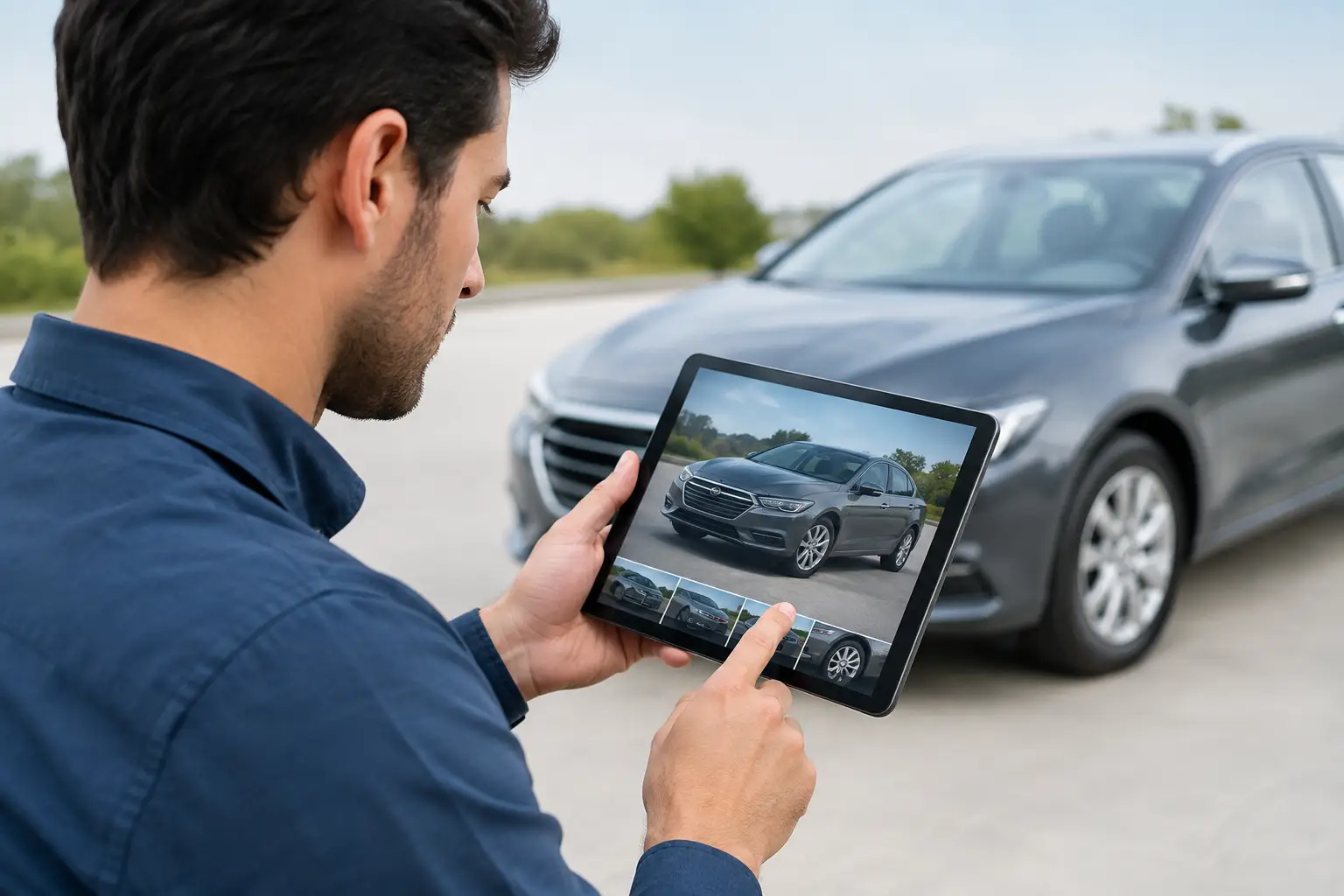
Dealer listings are designed to make a vehicle look appealing, not necessarily to answer every buyer question. Ask for current, high-resolution photos that show the areas most likely to reveal wear, repairs, or neglect. A helpful seller should be able to provide them without making the request feel unreasonable.
Request photos in natural light of every exterior panel, the roof, windshield, wheels, tires, lower rocker panels, and both bumpers. Ask for close-ups of any scratch, dent, paint chip, curb rash, or cracked trim already mentioned in the listing. You are not looking for a perfect used car. You are looking for an honest accounting of its condition.
Photos of the tires deserve extra attention. Ask for a straight-on image of each tire and a close-up of the tread depth. Uneven wear can point to alignment issues, worn suspension components, or a history of hard use. Tires that look acceptable in a wide-angle photo may still be near replacement time, which can add hundreds or thousands of dollars depending on the vehicle.
Inside the cabin, request clear images of the driver’s seat bolster, steering wheel, pedals, screens, climate controls, headliner, cargo area, and all three rows if applicable. Excessive wear that does not match the reported mileage is worth questioning. Look for water staining, corrosion on seat hardware, mildew odors described by the seller, or missing trim pieces. These details can signal a more complicated history than the listing suggests.
Do not overlook the underside. A dealership may have a lift available, and an independent inspector certainly should. Photos underneath can reveal fluid leaks, rust, damaged splash shields, fresh undercoating used to conceal corrosion, or impact damage. Surface rust is common in many parts of the country. Structural rust, perforation, and compromised mounting points are a different category of concern.
Ask for a Cold-Start and Walkaround Video
A live video call or a recorded walkaround is one of the best ways to close the gap between polished photos and the real vehicle. Ask the seller to start the car cold, meaning it has not been warmed up before filming. Cold starts can expose smoke, rough idle, warning lights, rattles, or delayed engine response that may not show up after the vehicle has been running.
The video should include the dashboard before startup, the engine starting, a view of the exhaust, and the instrument panel after startup. Ask the person filming to operate the headlights, turn signals, wipers, windows, locks, infotainment system, backup camera, climate controls, and power seats. If the vehicle has a sunroof, heated seats, driver-assistance features, or a power liftgate, have those demonstrated too.
A short drive video can be useful, but it has limits. Road noise, camera quality, and a salesperson’s driving style can hide a lot. Still, listen for braking noise, steering vibration, transmission hesitation, clunks over bumps, and warning messages. Ask whether the car tracks straight, whether it has been smoked in, and whether any features are currently inoperative. Specific questions tend to produce more useful answers than asking whether the car is “in good shape.”
Use an Independent Pre-Purchase Inspection
For most out-of-state purchases, the independent pre-purchase inspection is the decision point. It is the closest thing to having a knowledgeable advocate standing beside the vehicle when you cannot be there yourself.
A qualified local mechanic or mobile inspection provider can check mechanical condition, scan for diagnostic codes, evaluate tires and brakes, inspect for leaks and prior repairs, assess the suspension, and identify signs of accident damage or poor reconditioning. They can also verify whether the vehicle matches the listing and flag maintenance that is due soon.
The best inspection is not necessarily the cheapest one. Confirm what the inspection includes before scheduling it. A basic safety check may be enough for a low-mileage vehicle still under factory warranty. An older luxury vehicle, a performance model, or a car with an accident history deserves a deeper assessment. If the inspector raises concerns, ask for photos, estimated repair costs, and a clear explanation of whether the issue is cosmetic, routine maintenance, or a reason to walk away.
A dealer inspection or certified label can be valuable, but it should not replace independent verification. The dealer is selling the vehicle. Your inspector works for you.
Match the Condition to the Actual Deal
A remote inspection is only useful if it changes how you negotiate. A car needing tires, brakes, a windshield, or scheduled maintenance may still be the right vehicle. The question is whether its price reflects those needs.
Ask for an out-the-door quote that clearly separates the vehicle price, documentation fees, taxes, registration charges, add-ons, and transportation costs. If you are financing, review the rate, term, lender requirements, and optional products separately from the vehicle price. A favorable sale price can lose its advantage quickly if unnecessary extras or unfavorable financing are folded into the paperwork.
Distance also changes the return calculation. Consider the cost and inconvenience of shipping, registering the vehicle in your state, and resolving an issue after delivery. Some buyers are comfortable accepting minor cosmetic flaws in exchange for a rare color or hard-to-find configuration. Others should prioritize a local vehicle where an in-person visit is simple. Neither approach is wrong. It depends on the vehicle, the savings, and your tolerance for uncertainty.
Know When to Walk Away
The strongest remote-buying skill is recognizing when more information will not fix a weak deal. Walk away when the seller will not provide the VIN, avoids specific condition questions, refuses an independent inspection, or changes pricing and terms after you have invested time.
Also be cautious when photos appear heavily edited, the vehicle history conflicts with the story, or the salesperson pressures you to leave a deposit before basic verification is complete. A desirable used car may sell quickly, but urgency is not a substitute for due diligence. There will be another vehicle. Repairing a bad purchase is far more expensive than missing one listing.
No dealership visits. No guessing. No settling for a car simply because it is nearby or because the listing looks good on a screen. When Auto Allies helps clients source a vehicle nationwide, the process is built around verifying the car, the deal, and the terms before the buyer commits.
The right used car should feel like a well-supported decision, not a gamble that arrives on a transport truck. Ask for proof, bring in an independent set of eyes, and let the facts determine whether the vehicle earns your yes.